
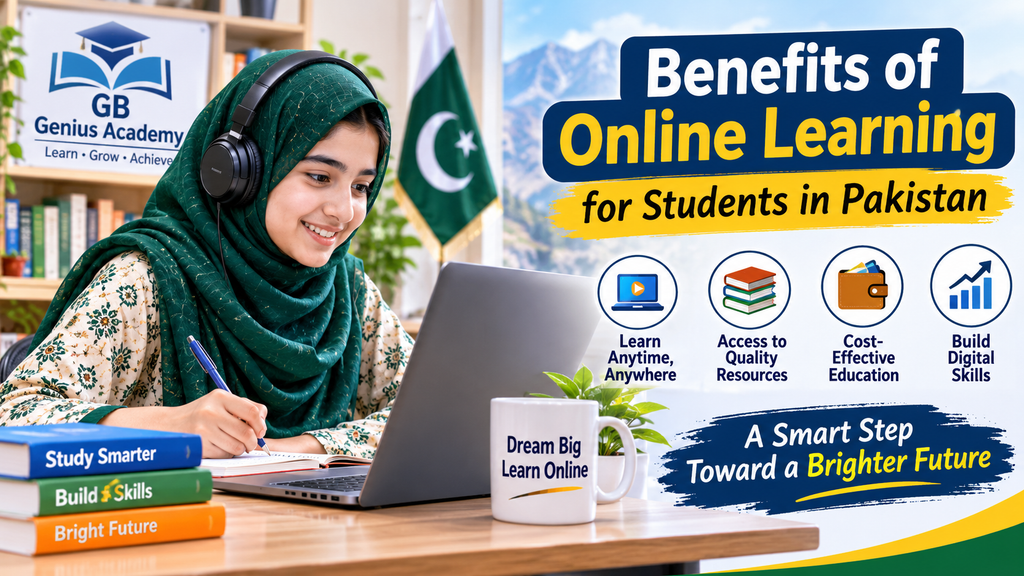
Introduction
Education plays an important role in building a successful future. In today’s digital world, technology has changed the way students learn, communicate, and access educational resources. Online learning for students in Pakistan has become an increasingly useful way to gain knowledge, develop new skills, and continue education from almost anywhere.
Traditionally, students depended on physical classrooms, textbooks, and face-to-face teaching. However, with the development of the internet, smartphones, computers, and digital learning platforms, students can now attend online classes, watch educational videos, complete assignments, and communicate with teachers without always visiting a traditional classroom.
In Pakistan, online learning provides valuable opportunities for students living in both urban and remote areas. For example, students in Gilgit-Baltistan and other distant regions can explore educational resources and learn new skills through digital platforms.
At GB Genius Academy, we believe that quality education and practical skills can empower young learners. Therefore, understanding the benefits of online education is an important step toward building a brighter academic future.1. Learn Anytime and Anywhere
One of the biggest benefits of online learning is flexibility. Students do not always need to travel to schools, colleges, or educational institutes to access learning materials. Instead, they can study from home, libraries, or other suitable environments with an internet connection.
Online education allows students to organize their learning schedules according to their daily routines. They can watch recorded lectures, review lessons, and complete assignments at convenient times when their course provides these options.
For students in Pakistan, particularly those living in remote areas, this flexibility can make educational opportunities more accessible.
Key benefits include:
- Study from different locations.
- Access recorded lessons when available.
- Manage study time more effectively.
- Balance education with personal responsibilities.
- Review difficult topics at your own pace.
2. Access to Quality Educational Resources
Another important advantage of online learning is access to a wide range of educational resources. Students can explore digital textbooks, video lectures, online tutorials, educational websites, and practice exercises.
These resources help learners understand difficult concepts through different teaching methods. For example, a student who struggles with mathematics can watch an explanatory video, practice questions, and review the lesson until the topic becomes clearer.
Furthermore, students can explore learning materials beyond their regular classroom curriculum.
Some useful online educational resources include:
- Google Classroom for managing educational activities.
- Khan Academy for free learning resources.
- YouTube educational channels for video lessons.
- Coursera for online courses.
- Microsoft Learn for technology-related learning.
By using these resources responsibly, students can improve their knowledge and become independent learners.
Education costs can be a challenge for many families in Pakistan. Traditional learning may involve transportation, accommodation, printed materials, and other expenses.
Online learning can help reduce some of these costs. Students may access free educational resources, affordable online courses, and digital study materials without spending money on daily transportation.
However, students may still need to pay for internet access, devices, and certain courses.
How online learning can reduce educational expenses:
- Reduces daily travel costs.
- Provides access to free educational materials.
- Offers affordable online courses.
- Reduces the need for printed study materials.
- Allows students to explore different learning opportunities from home.
As a result, online education can provide more flexible learning options for students and families with different financial situations.
4. Develop Essential Digital Skills
In the modern world, digital skills are becoming increasingly important for education, employment, and professional development.
Online learning helps students become familiar with computers, smartphones, educational applications, and digital communication tools.
While attending online classes, students can develop practical skills such as:
- Using Microsoft Word and PowerPoint.
- Searching for educational information online.
- Sending and managing emails.
- Creating digital presentations.
- Participating in online meetings.
- Using educational software and applications.
These skills are useful not only for academic activities but also for future career opportunities.
For young learners in Pakistan, developing computer literacy and digital confidence can be an important step toward professional growth.
5. Improve Time Management and Self-Discipline
Online education encourages students to take responsibility for their learning. Unlike traditional classrooms, some online courses provide flexible schedules that require learners to organize their own study routines.
Students must manage their time, complete assignments, attend scheduled classes, and prepare for examinations.
Developing these habits can improve self-discipline and responsibility.
Here are some useful time management tips:
- Create a daily study timetable.
- Set clear academic goals.
- Complete assignments before deadlines.
- Avoid unnecessary distractions.
- Take short breaks between study sessions.
- Review lessons regularly.
With consistent practice, students can become more organized and independent learners.
6. Personalized Learning at Your Own Pace
Every student has a different learning style, ability, and level of understanding. Some students understand lessons quickly, while others need additional time and practice.
Online learning can support personalized learning because students may pause recorded lessons, repeat difficult topics, and access additional learning materials.
For example, if a student finds an English grammar lesson difficult, they can watch another explanation, practice exercises, and review the topic before moving forward.
This approach helps students develop confidence and improve their understanding.
However, students should also communicate with teachers whenever they need guidance or feedback.
7. Educational Opportunities for Students in Remote Areas of Pakistan
Pakistan has many beautiful and geographically diverse regions, including Gilgit-Baltistan, where some communities are located far from major educational institutions.
For students living in remote areas, accessing educational facilities can sometimes be challenging because of distance, transportation, weather conditions, and limited local resources.
Online learning can help reduce some of these barriers by connecting students with digital educational resources, teachers, and learning opportunities.
For example, students in Gilgit, Skardu, Hunza, and other areas of Gilgit-Baltistan can explore online courses, improve their computer skills, and access educational materials through digital platforms.
Although internet availability, electricity, and suitable devices remain important challenges, digital education has the potential to create more learning opportunities for young people in these regions.
At GB Genius Academy, we believe every student deserves an opportunity to learn, grow, and develop the skills needed for a successful future.
8. Better Communication and Collaboration Skills
Online learning is not only about watching lectures and reading digital books. It also provides opportunities for students to communicate and collaborate with teachers and classmates.
Through virtual classrooms, discussion forums, group assignments, and online meetings, students can exchange ideas and work together.
These activities help learners develop important communication and teamwork skills.
Students can improve:
- Written communication.
- Digital communication.
- Teamwork and collaboration.
- Problem-solving abilities.
- Confidence in sharing ideas.
These skills can support students in their academic journey and future professional careers.
9. Prepare for Future Career Opportunities
The job market is continuously changing, and digital knowledge is becoming increasingly valuable across different industries.
Online learning allows students to explore practical skills that may support their future careers.
For example, students can learn:
- Graphic design.
- Digital marketing.
- Computer programming.
- Web development.
- Microsoft Office.
- Communication and presentation skills.
- Basic data analysis.
Learning these skills can help students prepare for further education, internships, freelancing, and employment opportunities.
However, completing an online course alone does not guarantee employment. Students should focus on practical experience, continuous learning, and building a strong portfolio.
10. Encourage Lifelong Learning and Personal Growth
Learning should not stop after completing school or college. The modern world requires individuals to continuously improve their knowledge and abilities.
Online learning makes it easier to explore new subjects, develop interests, and learn useful skills throughout life.
Students can choose courses according to their interests and career goals. They can also improve existing knowledge and discover new areas of learning.
Developing a habit of lifelong learning helps individuals become more confident, adaptable, and prepared for future challenges.
Challenges of Online Learning in Pakistan
Although online learning provides many benefits, students in Pakistan may also face certain challenges.
Understanding these challenges can help students and parents make better learning decisions.
1. Limited Internet Connectivity
Some rural and remote areas experience slow or unreliable internet connections, making it difficult to attend live classes or download learning materials.
2. Lack of Digital Devices
Not every student has access to a personal computer, laptop, or smartphone suitable for online education.
3. Distractions at Home
Studying at home can sometimes become difficult because of noise, household responsibilities, and social media distractions.
4. Limited Face-to-Face Interaction
Some students learn better through direct interaction with teachers and classmates. Online education may provide fewer opportunities for in-person communication.
5. Lack of Technical Knowledge
Students who are unfamiliar with computers and educational applications may initially find online learning challenging.
How to overcome these challenges:
- Download study materials when internet access is available.
- Create a quiet and comfortable study space.
- Use reliable educational platforms.
- Develop basic computer skills.
- Maintain regular communication with teachers.
- Follow a consistent study schedule.
With proper planning and guidance, students can overcome many of these difficulties.
Tips for Successful Online Learning
To get the best results from online education, students should develop positive learning habits.
Here are some practical recommendations:
- Set clear goals: Decide what you want to achieve through online learning.
- Choose reliable courses: Select educational platforms that provide useful and accurate information.
- Create a study routine: Follow a regular timetable to stay organized.
- Participate actively: Ask questions and communicate with teachers.
- Practice regularly: Apply what you learn through exercises and practical activities.
- Avoid distractions: Limit unnecessary mobile phone use and social media.
- Track your progress: Review your achievements and identify areas that need improvement.
Remember, successful learning requires consistency, patience, and dedication.
How GB Genius Academy Supports Students
At GB Genius Academy, our goal is to encourage quality education, academic development, and practical skill-building among young learners.
We believe education is more than memorizing information. It is about developing confidence, creativity, critical thinking, and the skills needed to succeed in a changing world.
Our academy aims to support students through educational guidance and opportunities to develop essential computer and digital skills.
We encourage students to:
- Improve their academic knowledge.
- Develop basic computer literacy.
- Build confidence and independent learning habits.
- Explore modern educational opportunities.
- Prepare for future academic and professional challenges.
Inspired by the potential of Gilgit-Baltistan, GB Genius Academy aims to empower young minds through knowledge, creativity, and continuous learning.
Start your learning journey with GB Genius Academy and take a step toward a brighter future!
Conclusion
Online learning has created new educational opportunities for students across Pakistan. From flexible study schedules and affordable resources to digital skills and career development, it offers many advantages for modern learners.
Although challenges such as internet connectivity, device availability, and limited face-to-face interaction still exist, proper planning and consistent effort can help students make the most of digital education.
For students in Gilgit-Baltistan and other regions of Pakistan, online learning can be a valuable way to access knowledge, improve academic performance, and develop practical skills.
Ultimately, education is the foundation of a successful future. By embracing technology and developing a habit of continuous learning, students can become more confident, skilled, and prepared for tomorrow.
GB Genius Academy is committed to promoting quality education and empowering students to learn, grow, and achieve their dreams.
Online learning offers flexibility, affordable education, access to digital resources, and opportunities to learn new skills. It also helps students study from home and access educational content from different locations.
Yes, online learning can be effective when students have a reliable internet connection, suitable learning materials, and a regular study schedule. It supports independent learning and helps students improve their knowledge and digital skills.
Online learning allows students in remote areas, including Gilgit-Baltistan, to access educational resources and online courses without travelling long distances. It can provide learning opportunities that may not be available locally.
Online education can be more affordable because students may save money on transportation, accommodation, and printed materials. However, internet access, devices, and course fees may still involve costs.
Students can develop computer skills, digital literacy, communication, time management, independent learning, research, and problem-solving skills through online education.